 Ibrahim AbuAlhaol
The average knowledge worker is now interrupted every two minutes during core hours, 275 times a day once the evenings are counted.1 On top of that stream sits a new one. In a 2025 survey of 1,150 full-time U.S. employees, 40% had received AI-generated "workslop" in the past month, and it made up 15.4% of everything they received.2 Each piece took almost two hours to deal with.2
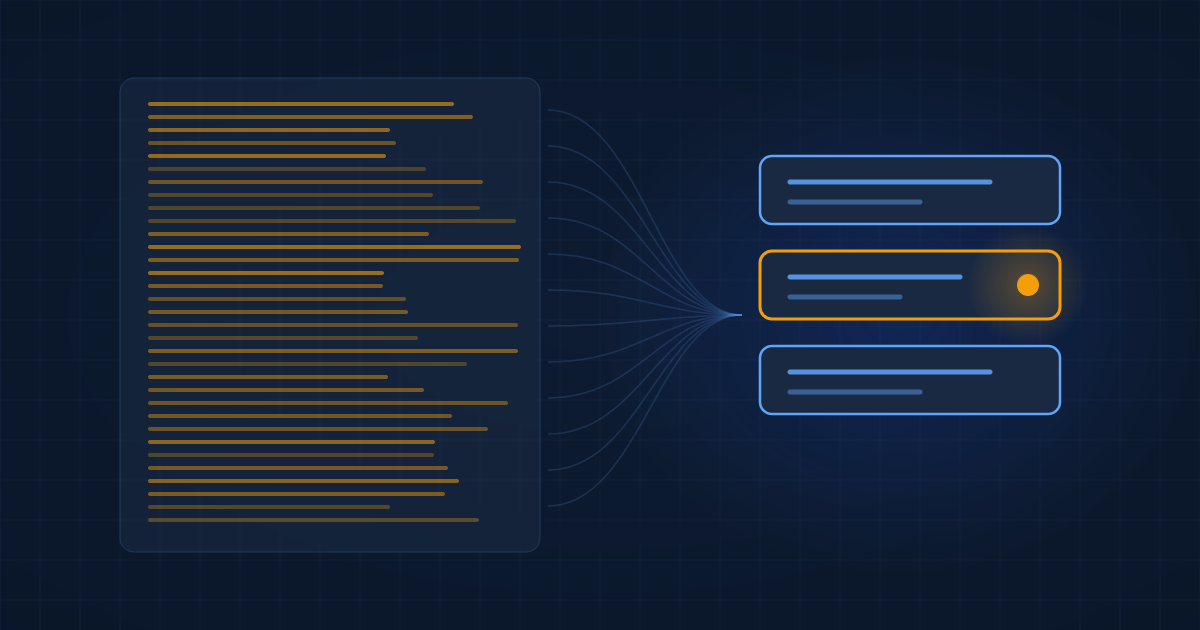
So people stop dealing with it. They skim the summary, accept the draft, forward the report. It is quieter than burnout and more dangerous, because work goes out under their name that nobody judged. My own rule is simple. When something is heavy and detailed, I do not read it. I ask the AI to abstract it into a visual, a method and a set of reasons, so my experience can judge it quickly and change direction while change is still cheap.
Auto-accept is a rational response to cost
Rubber-stamping looks like laziness. The research says it is closer to arithmetic. Parasuraman and Manzey found that automation complacency appears when other tasks compete for attention, and that automation bias affects experts as much as novices and cannot be prevented by training or instructions.3 A review of 74 studies named workload, task complexity and time pressure as the conditions that drive it.4 That is a fair description of most inboxes.
The generative era adds a twist. In a Microsoft Research survey of 319 knowledge workers, higher confidence in the AI went with less critical thinking, and the thinking that remained shifted toward verifying and stitching together what the AI produced.5 Verification has quietly become the job, and it is the part nobody budgeted for. I have called this the verification tax.
The most useful finding comes from five studies with 731 participants. People decide strategically whether to engage with an AI's explanation, and when the explanation did not lower the cost of checking the answer, they did not check.6 Reliance is a cost decision. If checking costs two hours, people accept. The lever is not willpower. It is the price of judgment.
Abstraction makes judgment cheap
Experience does not work at the level of detail. A senior engineer cannot verify 400 changed lines in a minute, but she can look at a diagram of which services now call which and see at once that one arrow is wrong. A finance lead cannot audit a 40-page model overnight, but she can read the five assumptions it rests on and spot the one that will not survive next quarter. Expertise is pattern recognition over structure, and structure is exactly what detail hides.
So the review should happen one level up. Instead of asking the AI for the finished artifact and then trying to read it, ask it to describe the artifact at the level where your judgment operates: what it looks like, how it was made, and why each major choice went the way it did. That abstraction takes minutes to read. If it is wrong, you change direction before anyone polishes the wrong thing. If it is right, the detail underneath inherits much of your confidence, and you know which parts still deserve a closer look.
Three abstractions that carry judgment
Three forms do most of the work, and each answers a different question that experience can test.
- A visualization answers "what is the shape of this?" A diagram of the flow, a table of options against criteria, a timeline, a map of who depends on whom. Shape errors, such as a missing step, a loop that should not exist or an owner who appears twice, are visible at a glance and invisible in prose.
- A methodology answers "how was this produced?" Which sources the AI used, what it left out, what it assumed and which steps it followed. A flawed method still produces confident output, so this is where you catch the report built on last year's numbers.
- A rationale answers "why this and not the alternative?" The three or four decisions that shaped the result, each with the option rejected. Experience is strongest here, because you have seen how similar decisions played out.
There is a trap in the third form. In a CHI 2021 study, AI explanations made people more likely to accept the AI's recommendation regardless of whether it was correct.7 A rationale written to persuade makes rubber-stamping easier, not harder. The fix is to ask for rationales that can be checked: name the rejected option, state the assumption, give the number. An explanation you cannot test is decoration.
Let the agent flag its doubts
Abstraction tells you what to judge. The agent can also tell you where to drill down, if it flags the right things. A study of 30 programmers found that highlighting the code most likely to need editing led to faster work and more targeted edits, while highlighting what the model itself found improbable gave no benefit over no highlighting at all.8 In a pre-registered study of 404 people, an AI that said "I'm not sure" in the first person reduced over-reliance and raised accuracy.9
The risk is flagging everything. Among 112 primary care clinicians, the likelihood of accepting a reminder dropped by 30% for each additional reminder received per visit.10 Security analysts describe the same arc as alarm burnout followed by desensitization.11 So ask for few flags, two or three per output, each tied to a reason: the number it could not source, the assumption it made on your behalf, the place where it chose between two reasonable readings.
Prompts that ask for the abstraction
This works today with any capable assistant, with no new tooling. The prompts below are the ones I use when an output is too long to judge directly. They follow the shape that agent builders now recommend, where agents pause for human feedback at checkpoints rather than only at the end.12
1. Before you write the full document, show me its structure as a diagram
   or a table: the main parts, how they connect, what each depends on.

2. State your method in five lines: the sources you used, what you left
   out, the assumptions you made, and the steps you followed.

3. List the three decisions that most shaped this result. For each, give
   the option you rejected, the reason, and any number you relied on.

4. Mark at most three places where you are least sure, and say why.
Read the answers before anything else. If the shape, the method or the reasons are wrong, redirect there; only then ask for the detail, or read it. Ten minutes at the level of abstraction replaces the two hours nobody had, and the work that goes out has actually been judged by the person whose name is on it.
What leaders should do
- Make "show me the abstraction first" the team norm for any AI output longer than a page: a visual, the method and the key decisions before the full draft.
- Review AI work at checkpoints, not only at the end, so changes of direction cost minutes of conversation instead of days of rework.
- Require rationales that name the rejected option and the number behind each choice, and treat an explanation that cannot be checked as no explanation.
- Cap flags at two or three per output, each with a reason, and watch whether people still read them; if acceptance drifts toward automatic, cut the flags further.